Latest News
RevIvel met with key people from Anglian Water on 7th April 2022 and also with representation from NHDC. Key updates were as follows:
- Measures have been implemented to smooth flow/ reduce stress on the weakened section of pipe (rising main) in Norton Road – which if you remember has burst three times in the last year. RevIvel has also been asking for a more robust and longer term fix. Anglian Water (AW) advised that it is evaluating the following options: (a) installing a temporary overland main, (b) a new rising main or (c) inserting a steel liner. It is envisaged that the preferred solution could be implemented within six months subject to permissions
- Misconnections and leaky pipes: after viewing the “foul accumulation” by the outflow pipe behind the pumping station in the Ivel Springs Nature Reserve, AW acknowledged that it is evident that there is a problem. RevIvel believes that an entire road in Baldock might be misconnected and a site visit with the AW team is to be organised promptly. All agreed to work together to raise awareness about misconnections generally and promote remedial action. AW agreed to share the following information: analysis of sediment samples, sewerage maps and travel pathways through the aquifer, as well as Environment Agency contacts
- Citizen Science: a collaborative approach was talked about with the potential of training and financing of monitoring equipment
- WINEP funding package: AW invited input from Revivel to help shape where to target future investment. RevIvel would be pleased to have input
In summary, this was the first meeting with Anglian Water. It is a promising start. RevIvel will continue to follow up to ensure forward progress and that agreed actions are delivered.
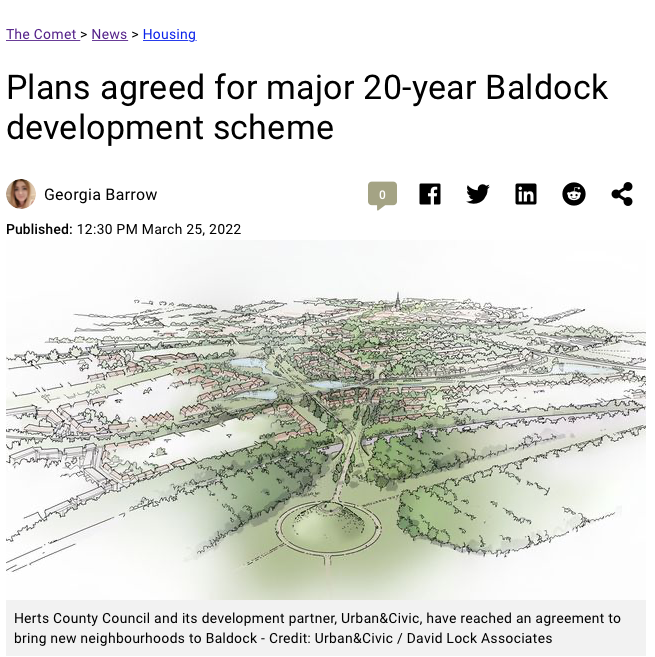
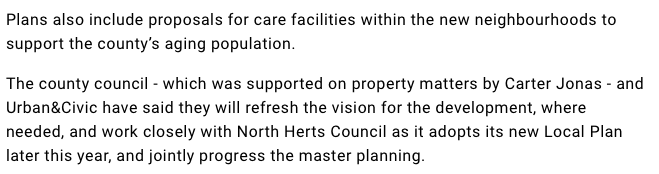
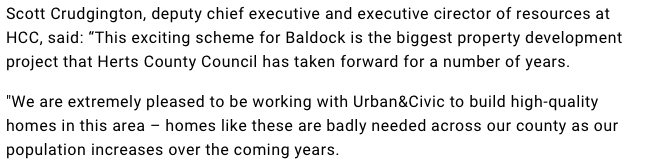
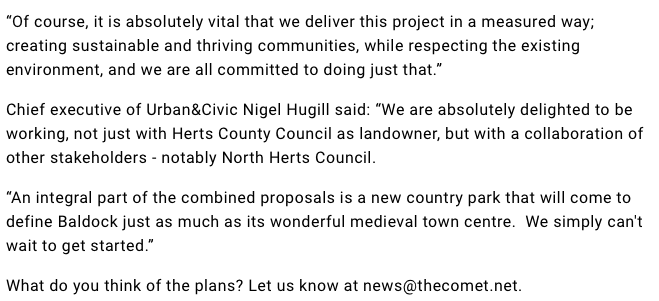
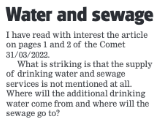
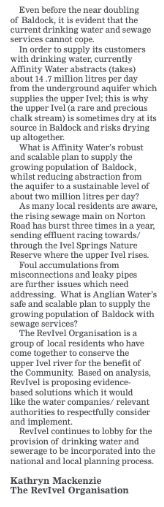
Revivel’s response to plans agreed for major 20 year Baldock development scheme.
The above article was published on the local Comet website on 25th March 2022 and then printed in the Comet newspaper on 31st March 2022.The Comet asked for responses and Kathryn Mackenzie from RevIvel responded and her letter was published a week later, which his produced below.
The SOS Save our Stream appeal started on 31st January to raise £2,000 in funds to finance the services of a technical specialist to enable us to prepare submissions and present our case to Affinity Water.
The appeal closed on 31st March and we are sure you would like to know that an amazing £5,275 was raised .
This amount is well beyond our initial expectations and a massive thank you goes to all of the members who helped and assisted with the appeal, members who kindly re-joined, members who recommended others to join, new members who saw the publicity and lots of other very kind people who gave donations.
Contributions ,and promises of contributions ,have also been made by local councillors and we have passed our thanks onto them too for their kindness.
John Lawson has helped us prepare The RevIvel Association’s response to the WRE and WSRE consultations focusing on the need to reduce abstraction to sustainable levels.
In addition, he is preparing a report on the impact of over-abstraction on the Upper Ivel which we will use in discussion with Affinity Water and the Environment Agency in the coming months. We hope to have this report complete by the end of April. In due course, we plan to share with you the highlights of the report.
With the additional money that has been raised we are now looking at making two purchases to evidence and support our requests to Affinity Water (re flow) and Anglian Water (water quality).
This equipment will record both water flow and water quality (ammonia, nitrates, phosphates, etc). We are still evaluating functional specifications for these devices and more about this will follow.
Background
American mink entered U.K. rivers and waterways from poorly maintained fur farms and towards
the end of the last century there was a “mass release” by Animal Rights Activists. Since then,
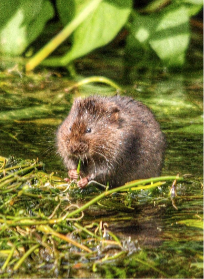
American mink have decimated the water vole population in the U.K., making the water vole,
“Britain’s fastest declining mammal”.
Therefore, it is important to monitor that mink are not present in order to start restoring water voles
and other biodiversity to Britain’s’ rivers.
Meeting in Radwell 31st March
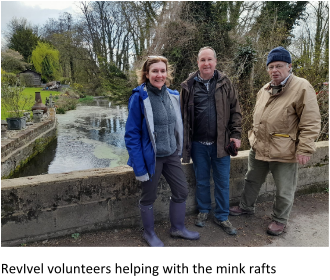
A group from RevIvel met with Josh Kalms, Water Vole Conservation and INNS Officer at Herts and Middlesex Wildlife Trust 31st March. The purpose of the meeting was to ensure mink monitoring
rafts were placed in two strategically important locations to protect Hertfordshire’s’ rivers from
mink coming upstream.
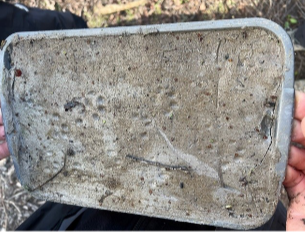
Firstly the “standard” mink monitoring raft in/ near the Mill Pond at Radwell (installed about
a year ago) was checked and evidence of mink footprints was noted in the wet clay area
within the raft
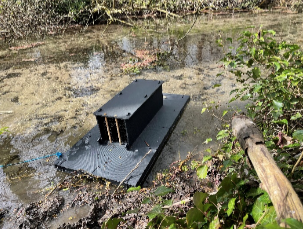
Secondly, a new Smart raft was installed in another strategic section of the river
How the Smart raft works
If an animal is captured, a text or email alert is generated to nominated individuals at RevIvel. The
raft will be checked as soon as possible or in any event within 12 hours if triggered. There is no need
to check unless alerted as there is “pulse” monitoring in place.
Animals other than mink (e.g. moorhens) should be released. Mink need to be dispatched swiftly
and humanely.
Looking forward
HMWT is considering locations for water vole reintroductions in rivers in North Herts in 2022 – one
such area under consideration is the Hiz. Next year – assuming no mink and water in the river
(Affinity Water, please note!) – the upper Ivel could also be a candidate for water vole
reintroduction.
Water voles are a vital part of river ecosystems and are a keystone species. Their burrowing, feeding
and movements help create conditions for other animals and plants to flourish. Ultimately also
helping achieve the mission statement of RevIvel which is to create an environment whereby brown
trout and ranunculus may once again thrive in the upper Ivel.
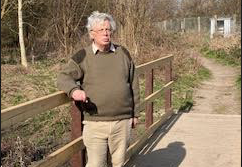
Nick Balmer originally came from Rutland, with the banks and meadows along the River Welland as his playground, and grew up with a love of rivers and wildlife. As a teenager he wanted to become a farmer or forester.
Rutland Water had just started construction, and Nick was deeply upset at the huge damage occurring to the local landscape & community becoming a schoolboy eco campaigner long before it became fashionable. By some quirks of fortune within a couple of years he had secured a job with the Welland & Nene River Authority (a forerunner of the Environmental Agency) and was then sent to take part in the construction of the reservoir. For five years he gained a great deal of practical experience in delivering projects on the ground building the project.
Once Rutland Water was completed, Nick became frustrated by his inability to achieve results within the constraints of the River Authority, where bureaucracy trumped every effort at improving the environment.
Nick left the UK travelling and working his way overland via Iran, India, Southeast Asia to Australia and New Zealand. In New Zealand he worked for a year for the NZ Forestry Service. Later, he worked in the UAE, Qatar and Saudi Arabia designing and building landscape gardens and irrigation projects for palaces, hotels, offices and international airports.
Returning to the UK in 1984 to get married, Nick had to take the first job that he could get. Chance ordained that this would be in Letchworth, and their first married home was secured in Baldock.
Recently retired, Nick has spent the past three decades as an estimator, project planner, bid manager and sector leader for several of the larger UK construction contractors including Volker Fitzpatrick, BAM Nuttall & Kier.
In his career he has been very lucky that many of his bosses encouraged him to develop environmental solutions. Projects that Nick has worked on have ranged from nuclear decommissioning, through airfields, motorways, roads, to the remediation of many contaminated former industrial sites. Nick has led the development of several types of renewable power projects. His favourite projects have always been those involving rivers and coastal sites.
In Nicks private life, he loves historical research, which he combines with local landscape archaeology. He is currently working on three major projects in former East India Company settlements, as well as a project on the Holocene geography of the Ivel, Ouse Catchment, and the Icknield Way.
Walking and wildlife has always played an important part in Nicks life. It gives him an ability to take the long view of landscapes. Nick has become very concerned in recent decades at the appalling way we treat our land & rivers. Seeing the River Ivel becoming more and more damaged, he was very pleased to find that he was not on his own in this concern, so was attracted to join Revivel.
Baldock has been very good to Nick and his family, and he would like to be able to give something back. Having spent most of his career improving other people’s communities, it is great to be able to bring to his skills and previous experience to bear in helping to bring solutions to some of Baldock’s most pressing issues.
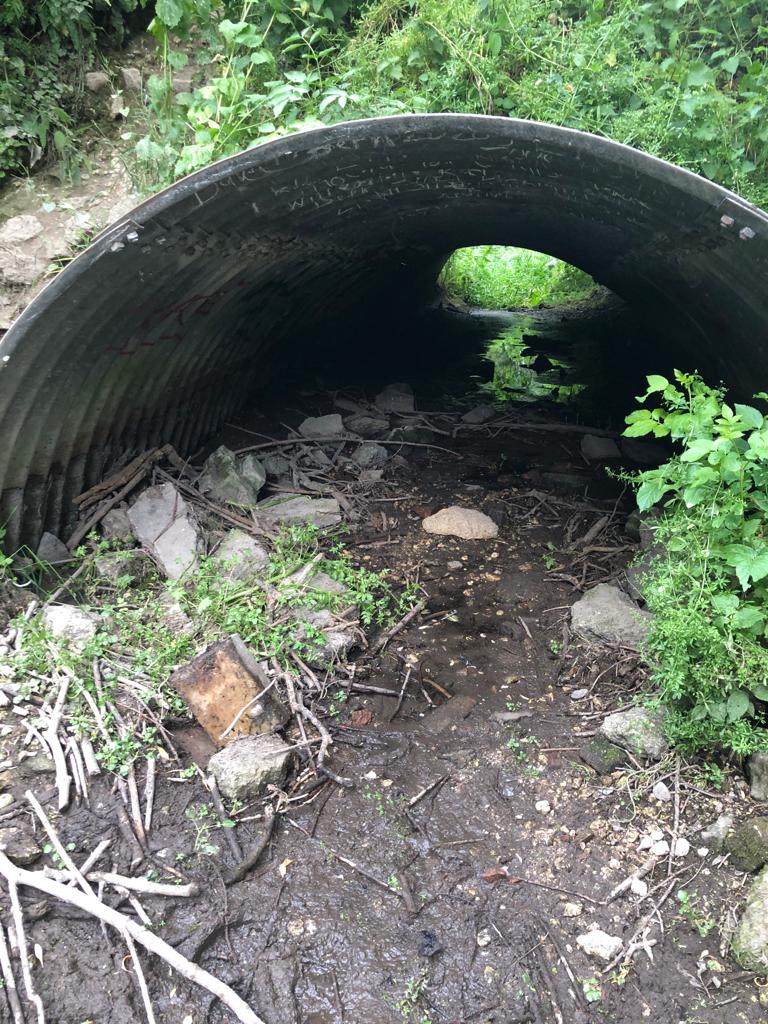
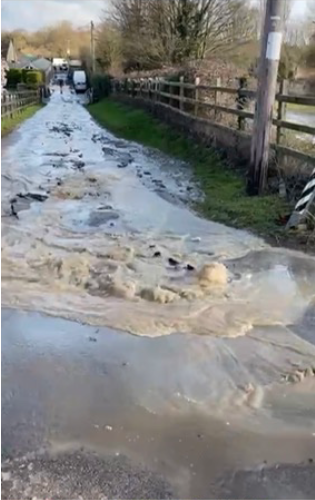
The rising sewage main on Norton Road (adjacent to the Ivel Springs Nature Reserve) burst Sunday 6th March sending pressurised raw sewage racing towards Ivel Springs for the third time in a year. The adjoining stables took the brunt of the flow and staff there initially
reported the incident. RevIvel representatives subsequently shared news of the incident extensively on social media, and had follow up conversations with Anglian Water and the EA.
Three breakages in one year leads to the conclusion that this aged section of pipe has been damaged – probably by the crushing forces exerted by the lorries/ vehicles using this stretch of road –exacerbated by the shallow depth of the pipe and indeed the axle-weight of the sewage-loaded tankers which attend the site whenever there is an incident. The thrust of our conversations with Anglian has been that they should carry out analysis to understand and confirm the underlying cause of the problem and implement a long-term solution as soon as possible.
Anglian advised the following Thursday that the (short term) fix has been delivered but the excavations have been left open to investigate an investment to ensure no recurrence. The use of “investment” sounds potentially quite promising.
Additionally, two senior members of the Anglian team are coming to the site early April to meet with Councillor Steve Jarvis and a handful of RevIvel representatives. Discussion points so far include:
Long term solution for this section of pipe
Pollution monitoring for the upper Ivel e.g., ammonia – also nitrates, phosphates etc
Misconnections: are where foul effluents from sources like toilets are incorrectly plumbed into the surface water pipes (which discharge directly into the environment) or run off water is plumbed into the wastewater systems (where in the event of heavy rain, the sewage system cannot cope, and sewage discharges take place under licence).
An area of foul ponding and subsurface pollution due to breaks in the sewers and misconnections has accumulated near the Ivel Springs pumping station (part of the wetland area proposed by Affinity Water/Five Rivers).
We will be seeking Anglian Water’s proposals for fixing misconnections, and how they intend to clean up the accumulated contamination of the access track & area around the pumping station where the biohazards from these broken pipes have accumulated.
The response to the SOS Save our Stream appeal that started on 31st January 2022 has been fantastic and lifted everyone’s spirits.
Thank you so much to all those who have contributed so far, and you have certainly made a difference.
Since the appeal started we have had new members join, several current members renew their membership and many kind donations.
We have raised a significant amount towards our target. This money will go to finance the services of a specialist to enable us to prepare submissions and present our case that Affinity Water needs to reduce abstraction to sustainable levels, and help get the Ivel onto the WRSE and WRE priority abstraction reduction list.
We will post the report on the Revivel website once completed and issued.
Lack of flow is the number one issue faced by the upper Ivel.
We are now in the middle of the campaign and have articles appearing in the local press. In fact, the appeal is front page news in this week’s Letchworth and Baldock Comet. The article can be seen at
We also hope to be in the Stotfold and Arlesey News Magazines soon.
Our social media pages have also been focusing on the appeal and will continue to do so.
If, thanks to everyone’s kind generosity, more than the target amount is raised, we intend to purchase water quality testing kits which our volunteers will use. We need data to enable RevIvel to take forward concerns about water quality (i.e. sewage pollution) with Anglian Water.
Water quality is the number two issue faced by the upper Ivel.
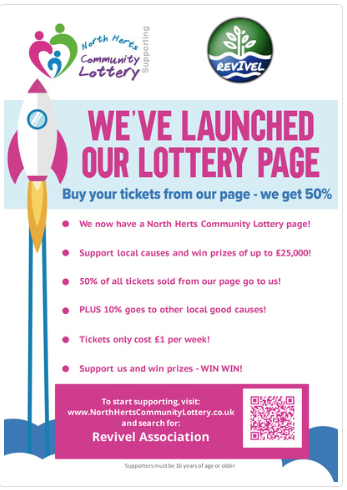
RevIvel has joined the North Herts lottery as a way of raising funds , not just for RevIvel but also for other worthwhile local charities and communities.
For more information please visit
https://www.north herts community lottery.co.uk
Please pass on the below link to family and friends if you feel they would like to play.
Last chance to save and restore the Ivel
Despite RevIvel’s persistent and determined efforts, the response of Affinity Water and the Environment Agency has been wholly inadequate to date to save the upper Ivel chalk stream.
Over-abstraction in the chalk catchments and potential solutions are being addressed nationally in the regional water resource management plans. Affinity Water is part of Water Resource South East (WRSE) which is compiling its regional plan for the next 100 years. Through this process, priority catchments are being identified for reduction in abstraction.
We need to draft in expert help to navigate the maze of “hoops” (complex procedures, technical submissions etc) to get our rare and precious Ivel chalk stream formally onto the national list of required abstraction reduction.
Currently Affinity Water abstracts (takes) about 14 .7 million litres per day; this rate exceeds the rate of recharge (natural replenishment) of the aquifer which feeds the river Ivel, especially in years with low winter rainfall.
The Ivel is one of the most over-abstracted chalk streams in the UK. Current best practice suggests that 15% abstraction as a percentage of recharge, (c.2 million litres per day) would be sustainable to maintain a healthy river.
The upper Ivel is suffering badly.
Affinity Water is obliged to supply its customers, so if abstraction were reduced as outlined above, the shortfall of about 12 million litres per day at Baldock would have to be met by other means. Affinity Water plans to import 25 million litres per day from Grafham Water by 2025 to supply its network. It is critical that the Letchworth/ Baldock/Stotfold area gets a fair proportion of this to alleviate pressure on the Ivel.
There should be water and flow in the upper Ivel all year round as evidenced by the fact that at the beginning of the twentieth century (early 1900s) the first 6km of river between Baldock and Astwick powered five watermills, enabled a thriving watercress industry, supplied plentiful fresh water for umpteen breweries and supported a brown trout hatchery.
At this time of year, in January, the river flow should be recovering as groundwater levels rise due to autumn/winter rainfall. However due to lack of rainfall since October 2021, this is not happening.
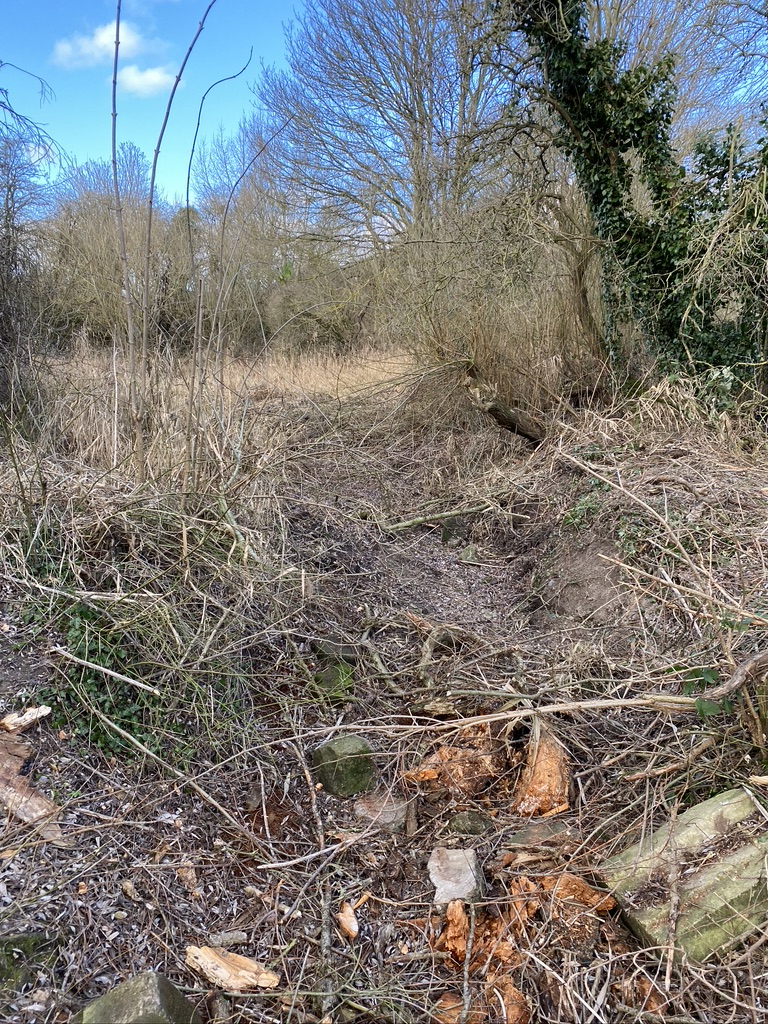
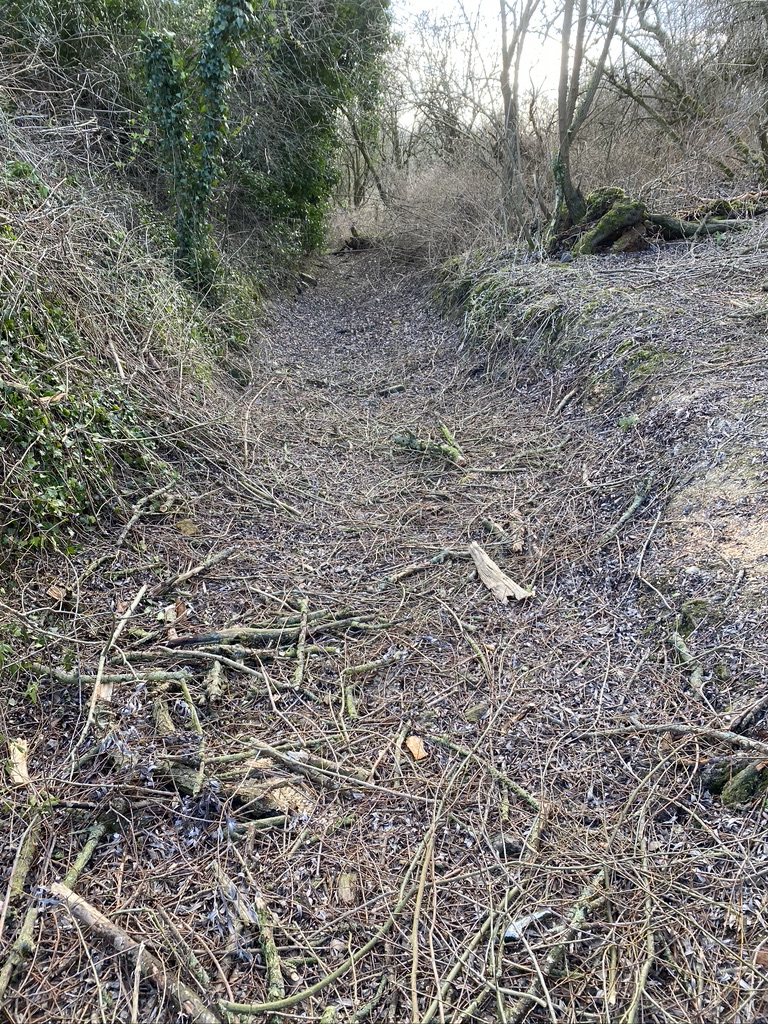
To compound this, Affinity Water continually takes too much water, preventing the springs from flowing. The official source of the river Ivel at Ivel Springs Nature Reserve is dry and has been so since August 2021. There is a major risk that the River Ivel will dry up in 2022. Time is running out to save our upper Ivel.
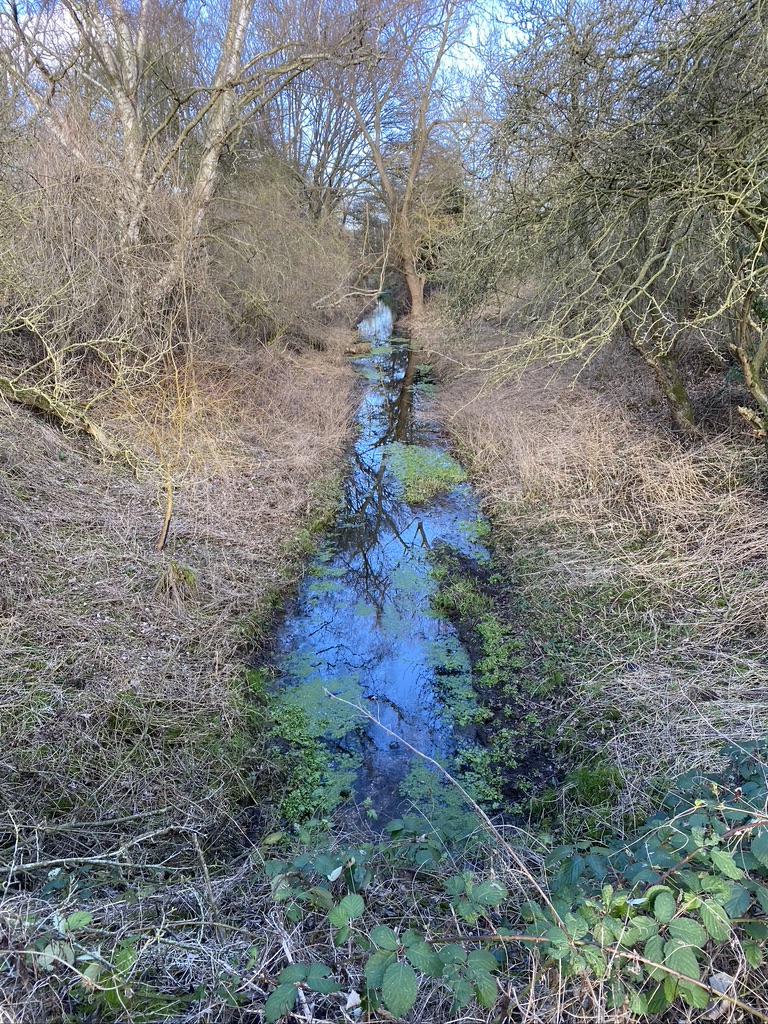
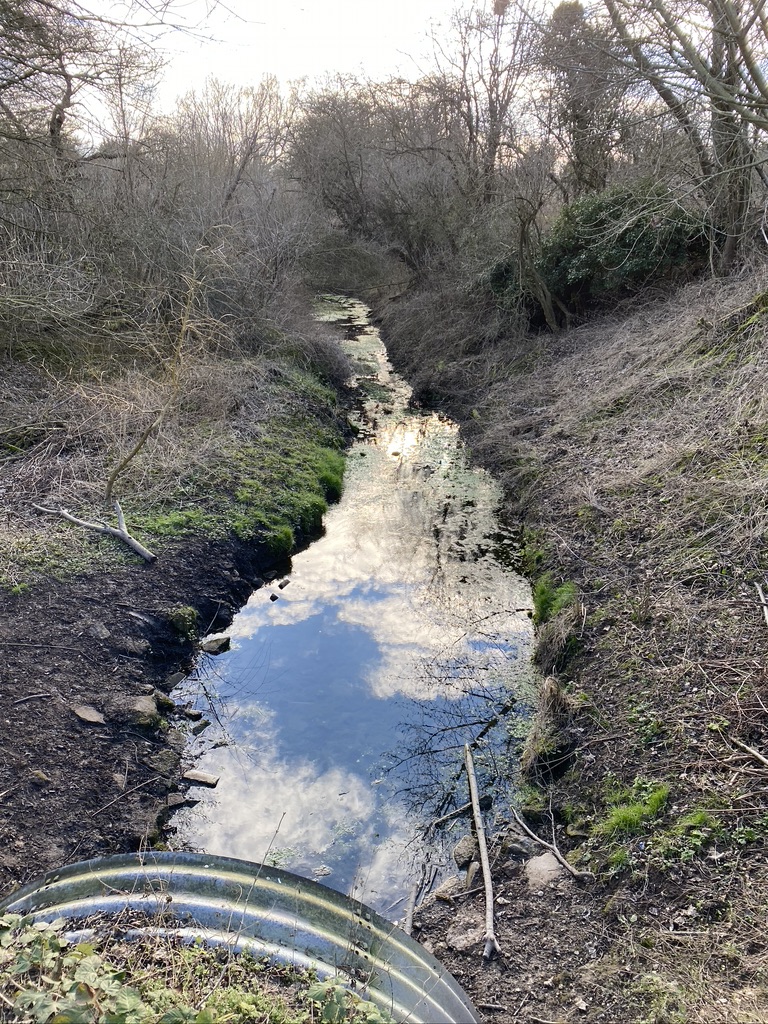
These images were taken on 27th January 2022 at Ivel Springs, Baldock.
Where there should be water there is none.
And where is water, the depth is very low, it’s stagnant with no flow.
We need expert consultancy help to save the Ivel.
John Lawson, with extensive qualifications, experience and connections in this field, has agreed to work with us to help get the Ivel onto the WRSE priority abstraction reduction list.
We need to raise £2,000 by 31 March 2022 to fund this necessary work so we are starting a campaign to increase more awareness with the local community.
This will include press releases and social media appeals to enhance our membership numbers, ask for donations, and encourage anyone with pictures and stories about the Ivel in better days to share with us, as this strengthens our case that in days gone by, the Ivel flowed all year round.