membership
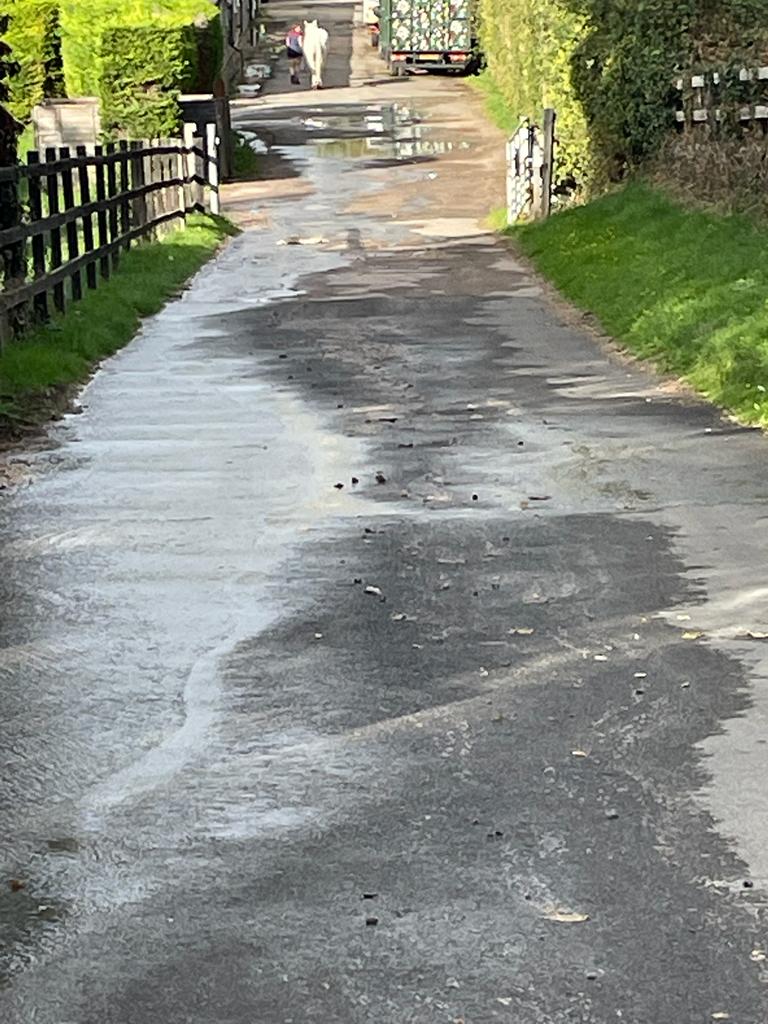
Over the weekend of 1st and 2nd October the sewage pipe near Ivel Springs burst again , this is the 4th time in the last 2 years !!!
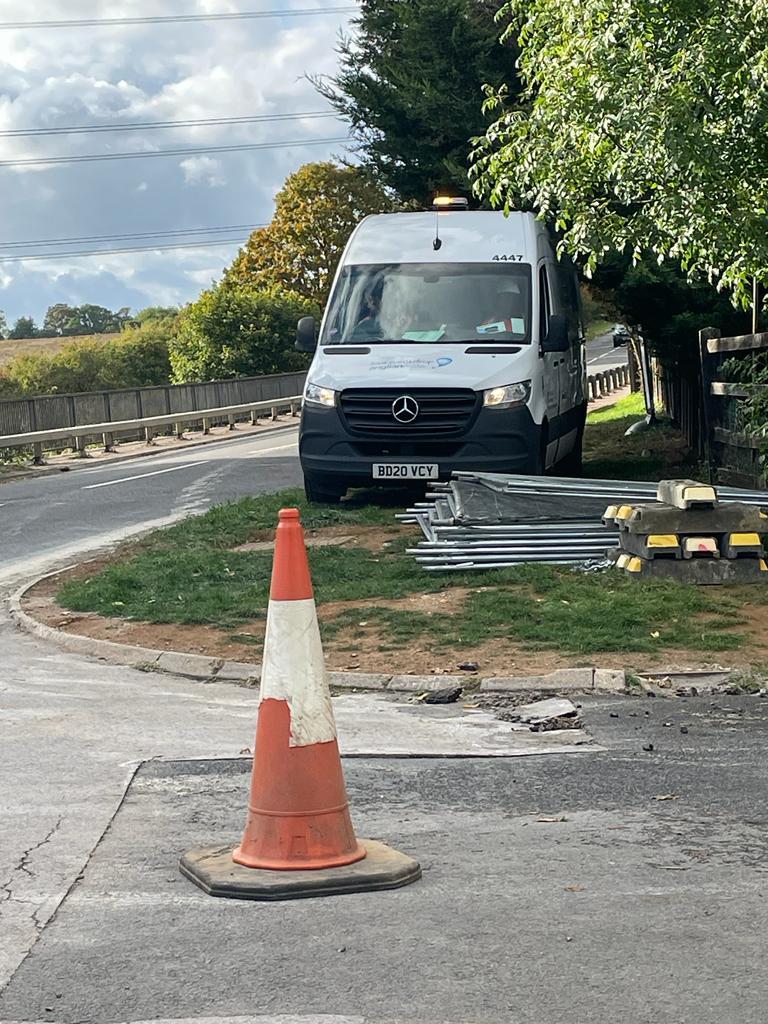
Revivel volunteers were on the scene and in contact with Anglian Water engineers.
The Environmental Agency was also informed.
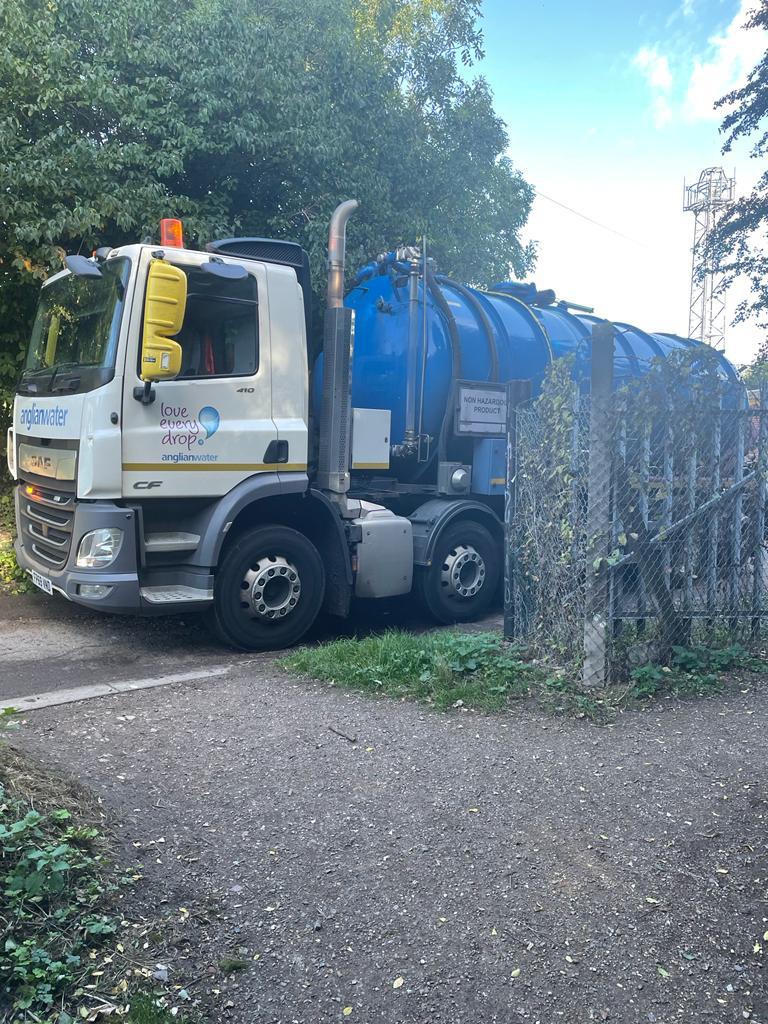
The sewage main was shut down and the pumps turned off and pumper trucks were transporting sewage away from Baldock.
The trucks appeared to be working through the nights.
By Tuesday the pipe seems to have been patched up and the works were finishing …..until perhaps the next time ?
Revivel will challenge Anglian Water ,again ,to provide a long term solution.
Bishop leads pilgrimage and service in support of the River Ivel
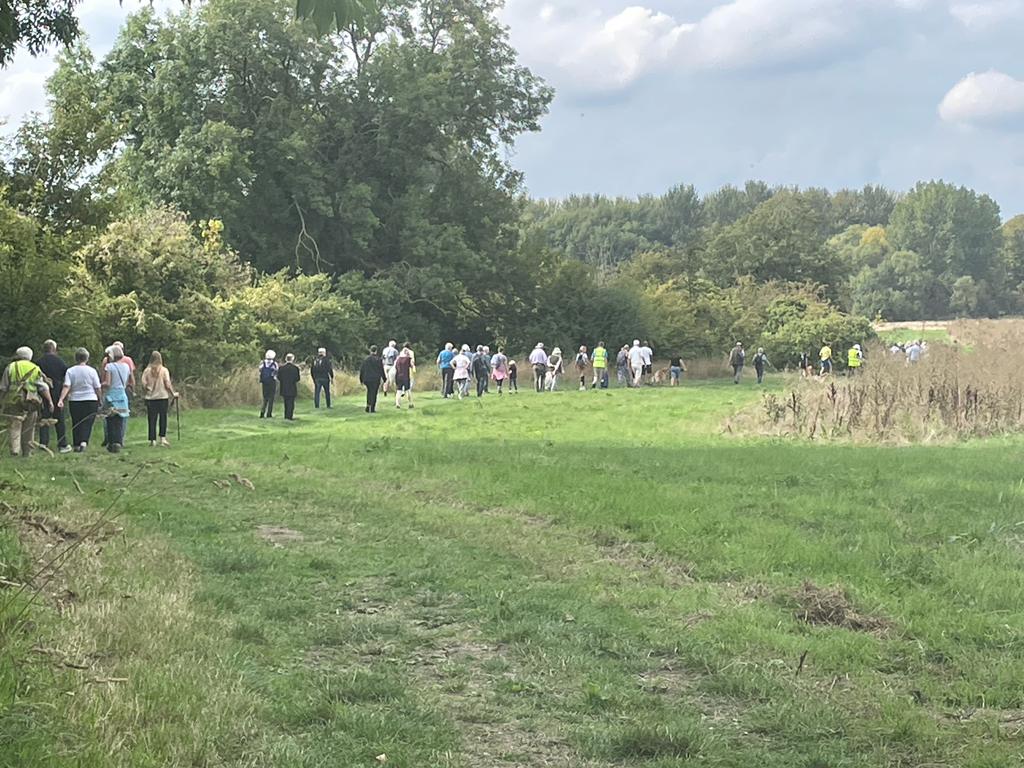
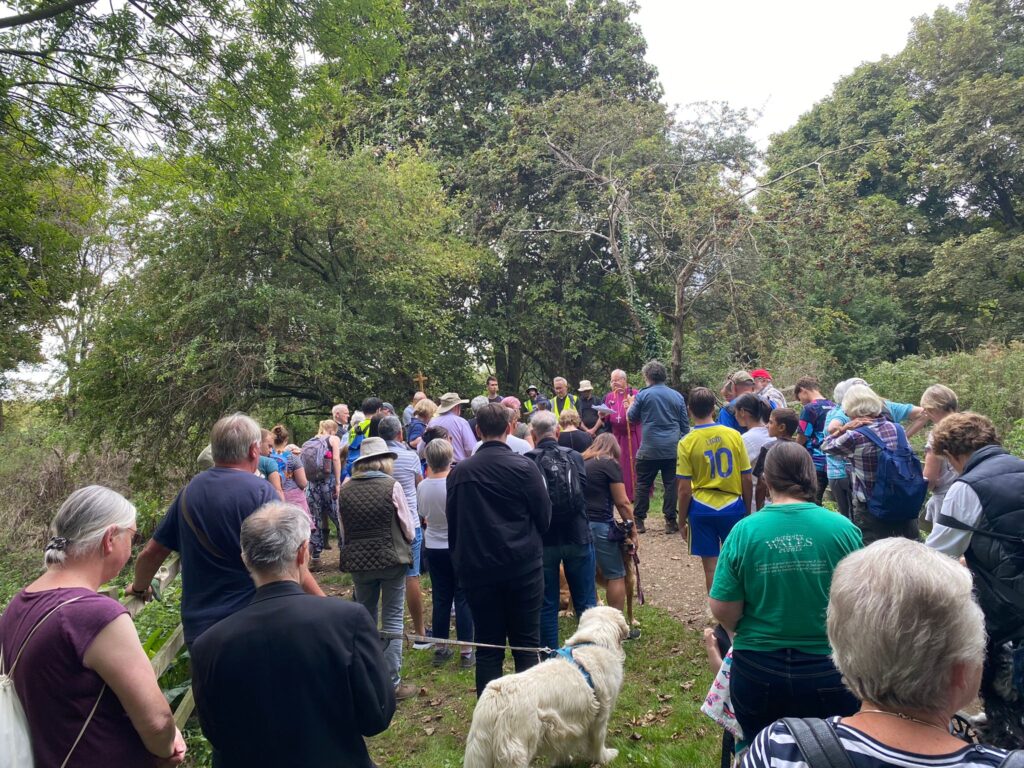
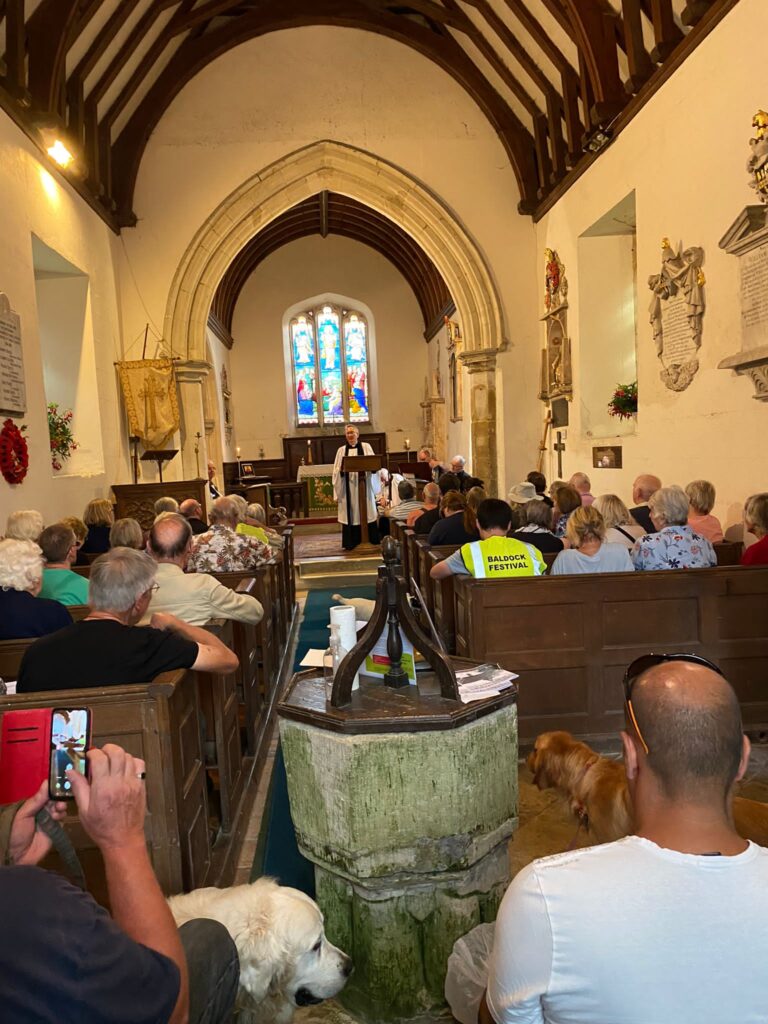
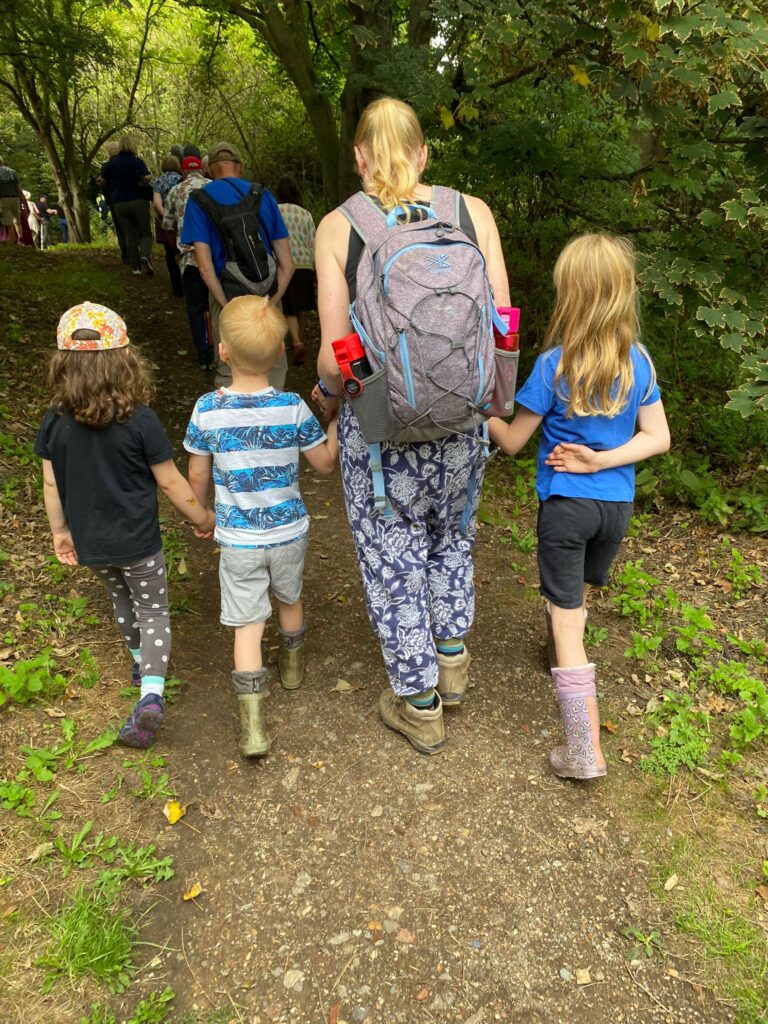
On Sunday 11th September 2022 The Rt Reverend Richard Atkinson, Bishop of Bedford and The Reverend Bill Britt, Vicar of Radwell, Stotfold and Fairfield lead a pilgrimage along the Upper Ivel to show community support for this rare chalk stream and highlight the atrocius condition it is in .
The walk started at 2.00pm at The Arena car park, Norton Road, Baldock and finished in Radwell at All Saints Church with a short service at 3.30pm.
In the Church Times article Bishop leads chalk-river pilgrimage protest Revd. Bill Britt is quoted as saying “I just couldn’t believe how many people came. I think it was a convergence of two trends — the concern about rivers, particularly chalk rivers, and the popularity of pilgrimage; the idea of people gathering with others, having a shared experience and a shared purpose.”
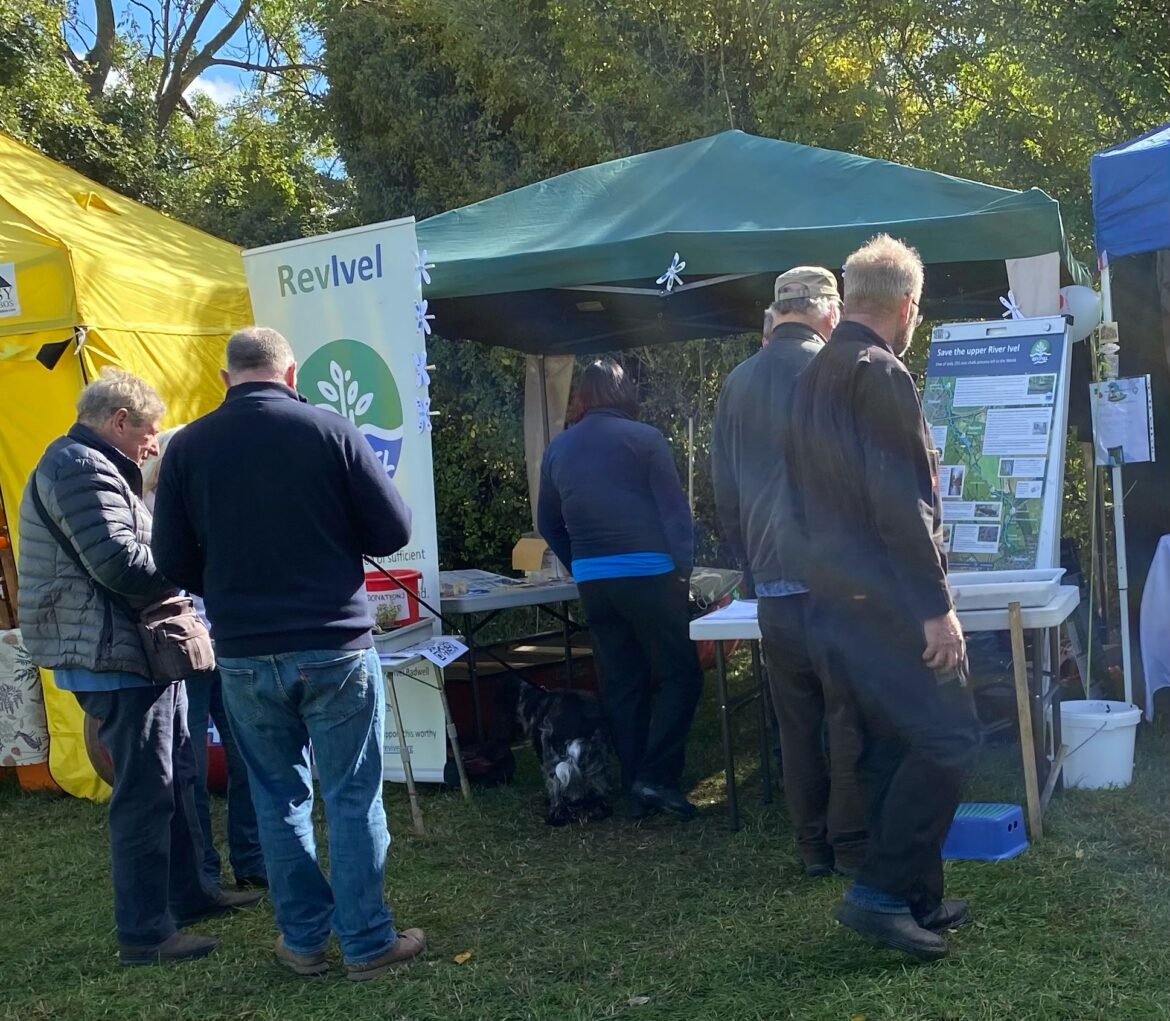
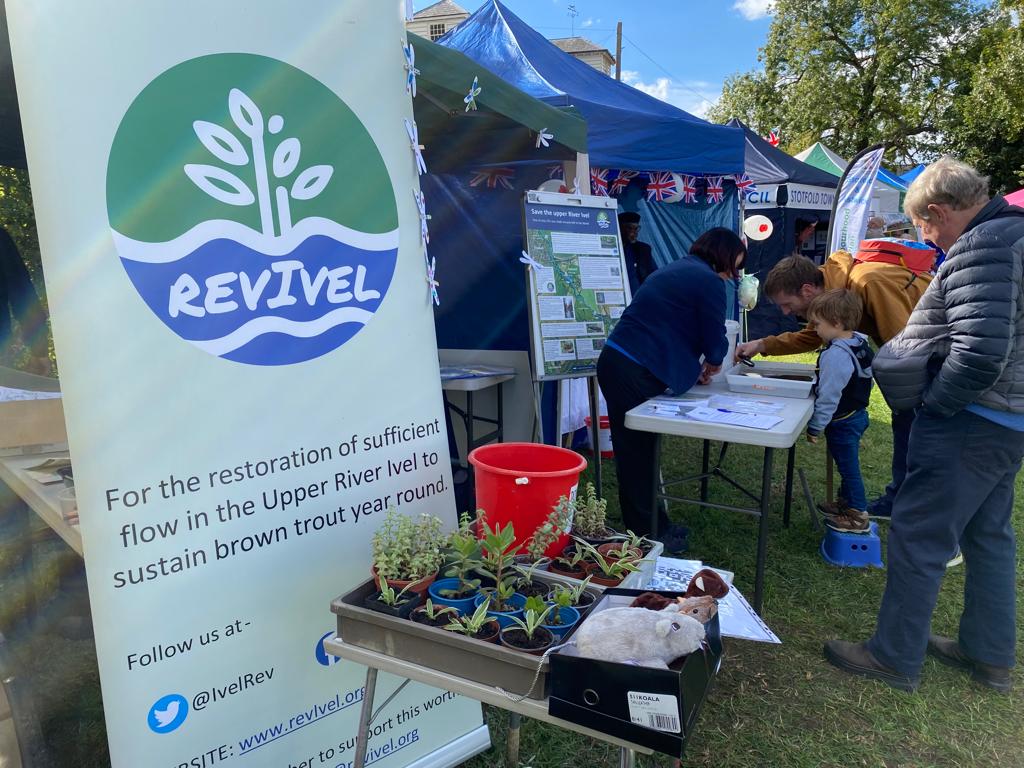
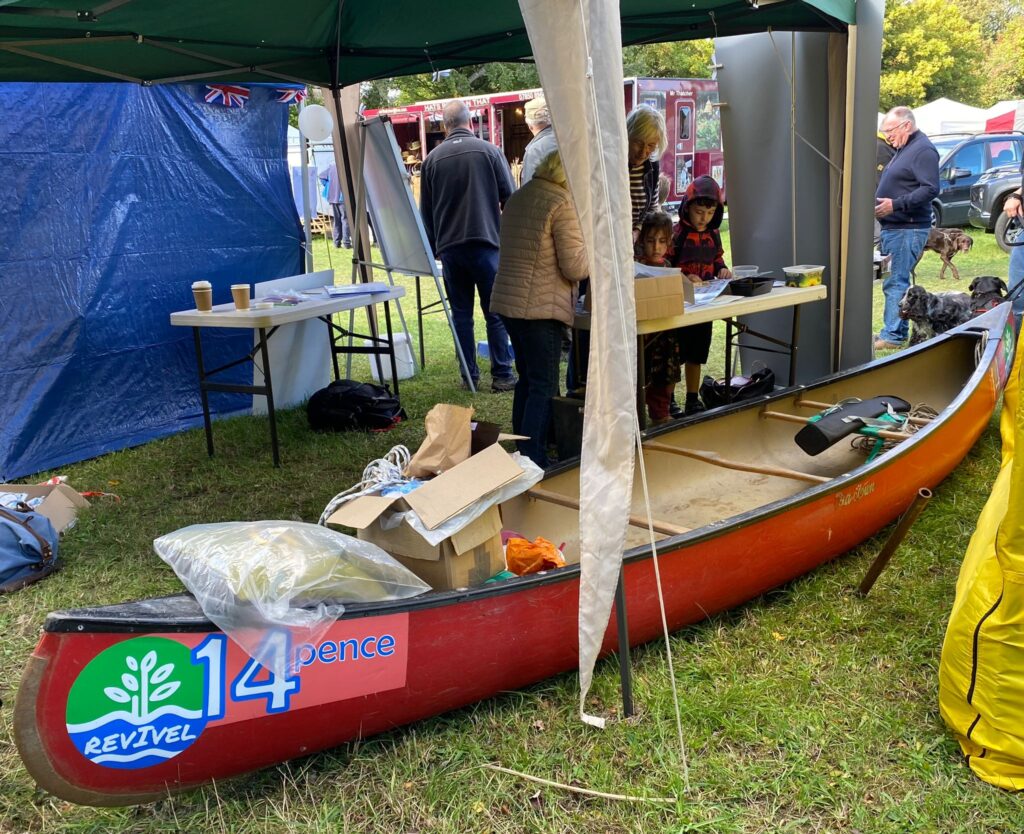
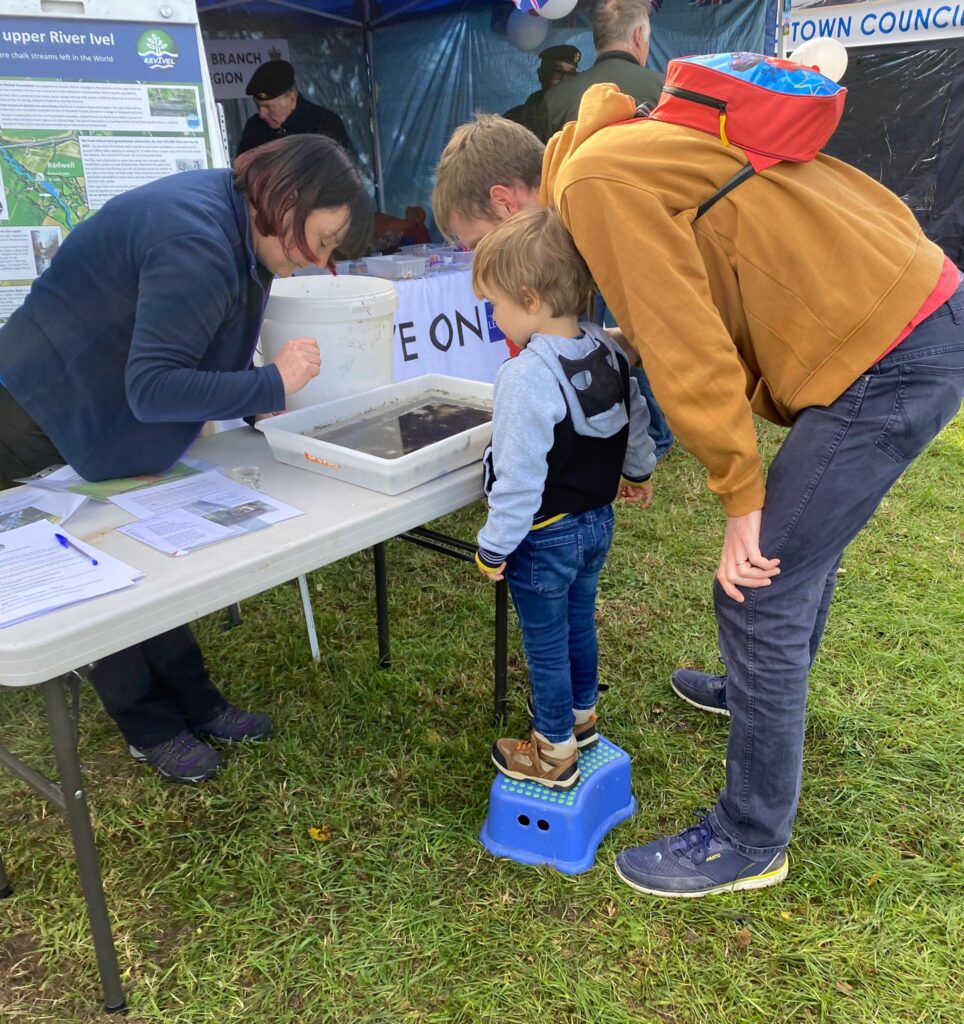
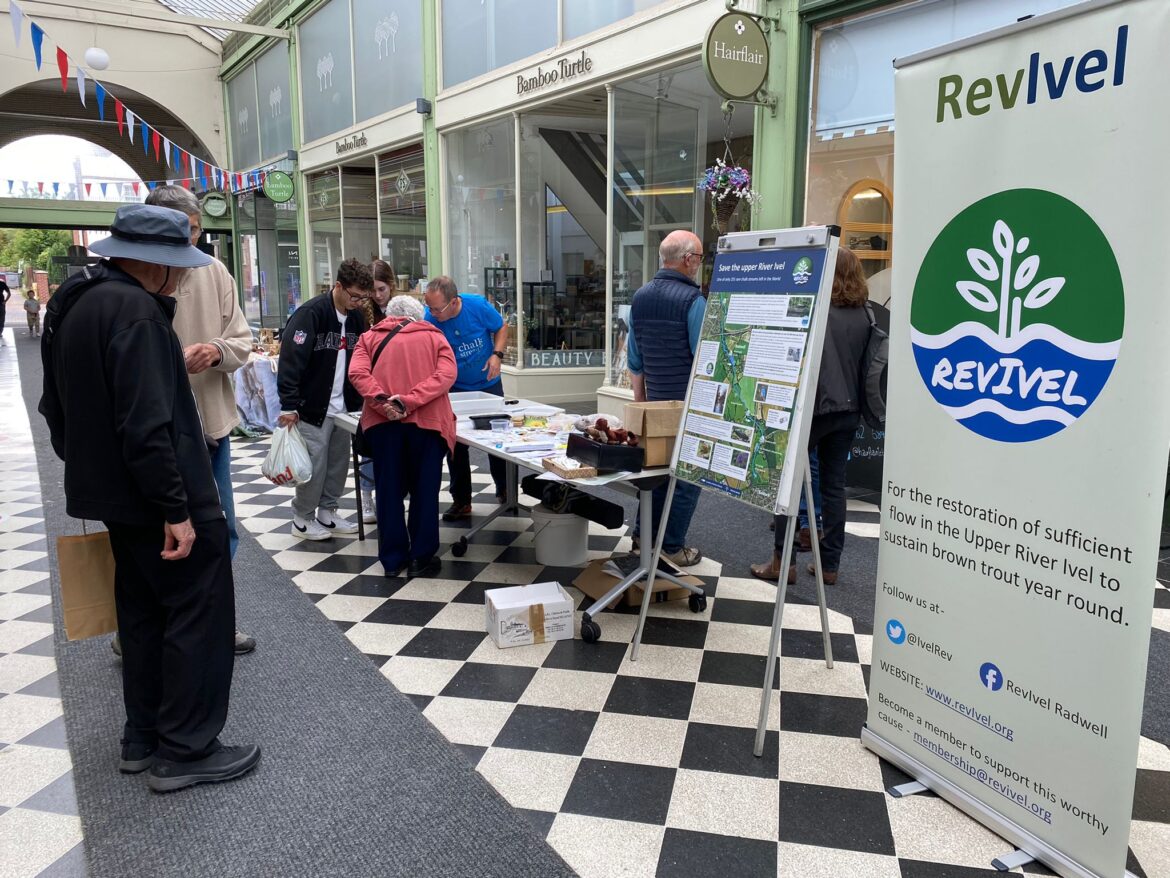
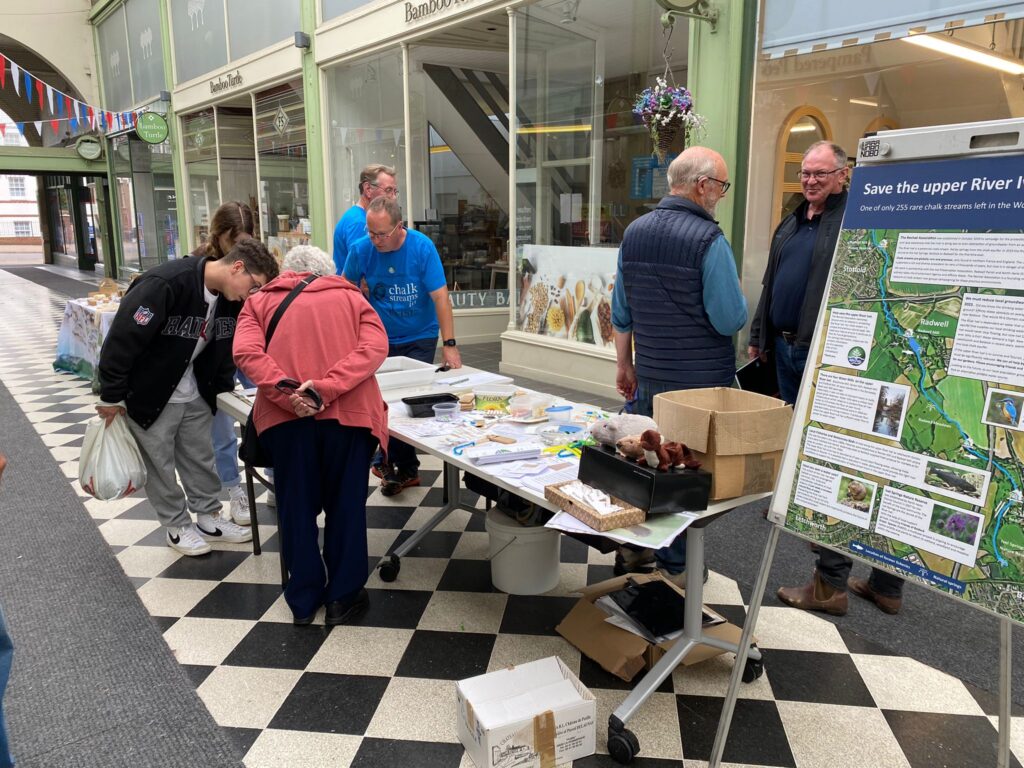
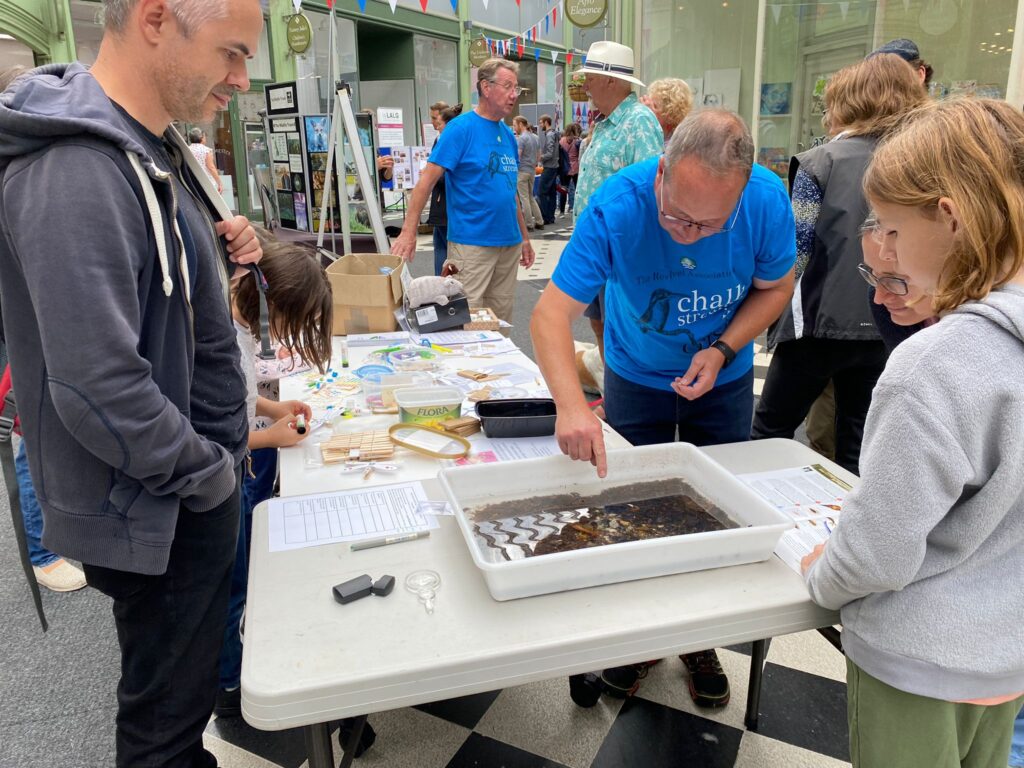
On Saturday 10th September 2022 RevIvel committee members attended the Letchworth Garden City Green Festival.
It was a very successful day talking to everyone about the plight of the Upper Ivel, many who were unaware of the dreadful condition it is in .
The festival was organised by green-minded volunteers with support from Letchworth Heritage Foundation , Love Letchworth and Friends of the Earth.
Since the publication of John Lawson’s report on the River Ivel there has been a flurry of meetings with key stakeholders. The report was launched at a joint meeting with the Environment Agency and Affinity Water in June.
We held a meeting with the Environment Agency recently to outline our concerns about how and where they monitor the health of the river for the purposes of the Water Framework Directive (WFD). Basically, we are concerned that the assessment point is 10kms downstream after the confluence with the Pix Brook. By this point the Ivel no longer has the characteristics of a chalk stream. Additionally, the assessment point “benefits” from the 10 Ml/day output from Letchworth sewage treatment works.!
Charles Rangeley -Wilson OBE (author, conservationist, and Chair of a national chalk streams restoration group) has explained this situation perfectly in his blog which is well worth a read:
https://chalkstreams.org/2022/07/10/revivel-2/
We have further meetings scheduled in August with key personnel from Water Resources East (WRE) to try and persuade them to take up John Lawson’s suggestions. These include reducing abstraction from the chalk aquifer and letting this water flow all the way down the Ivel into the Ouse (giving us a much healthier river all year) and potentially using the extra flow in the Ouse to top up Grafham Water reservoir. Water can be returned to Baldock in existing pipes from Grafham Water.The headwaters of chalk streams often suffer from over-abstraction, and we are proposing that the Ivel is used as a national test case to demonstrate the validity of the “Chalk Streams First” model.
https://chalkstreams.org/2020/05/24/its-high-time-we-put-chalk-streams-first/
These upcoming meetings are key in getting the needs of the Ivel into the long-term regional plan for water use in the East of England.
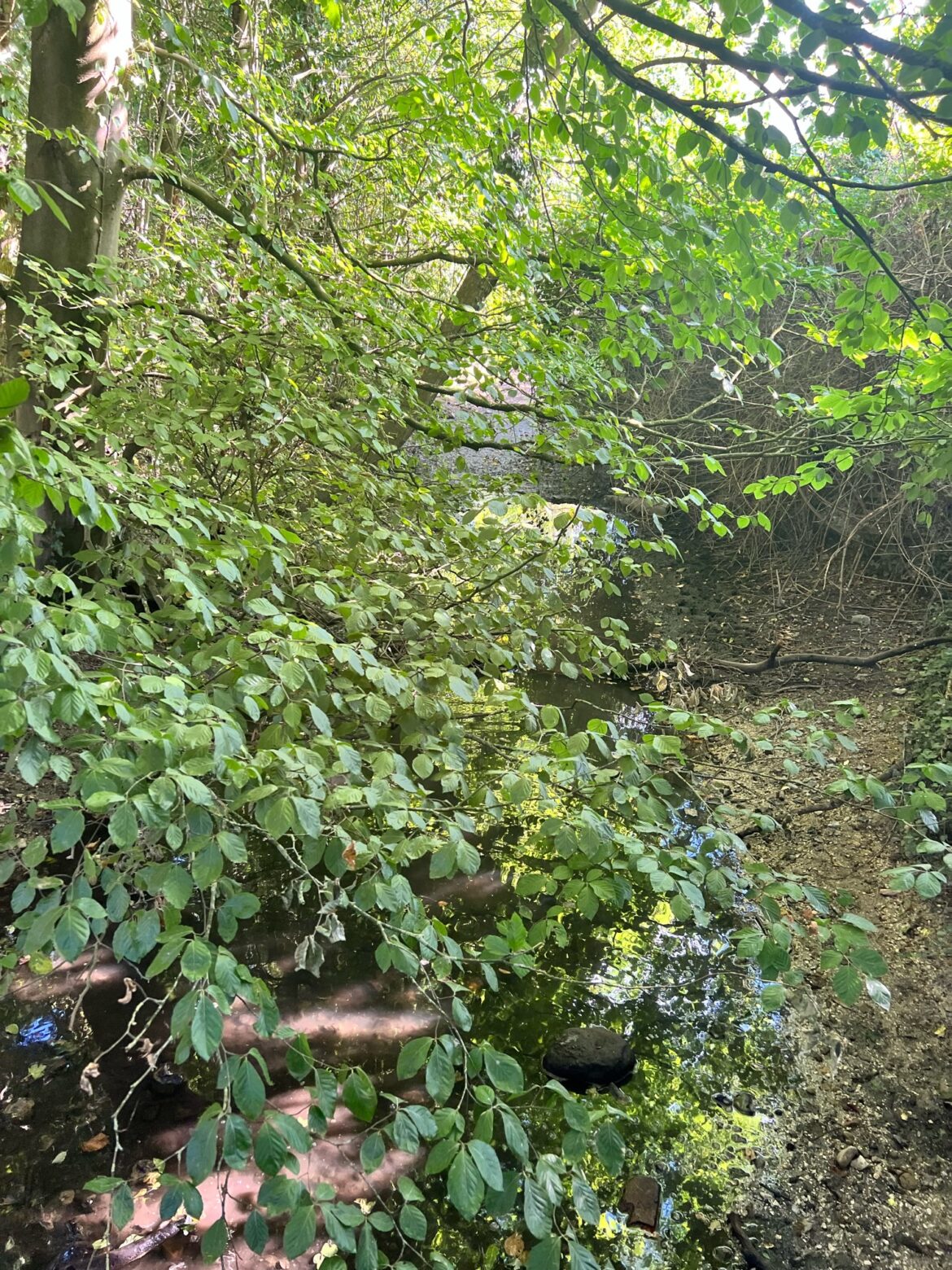
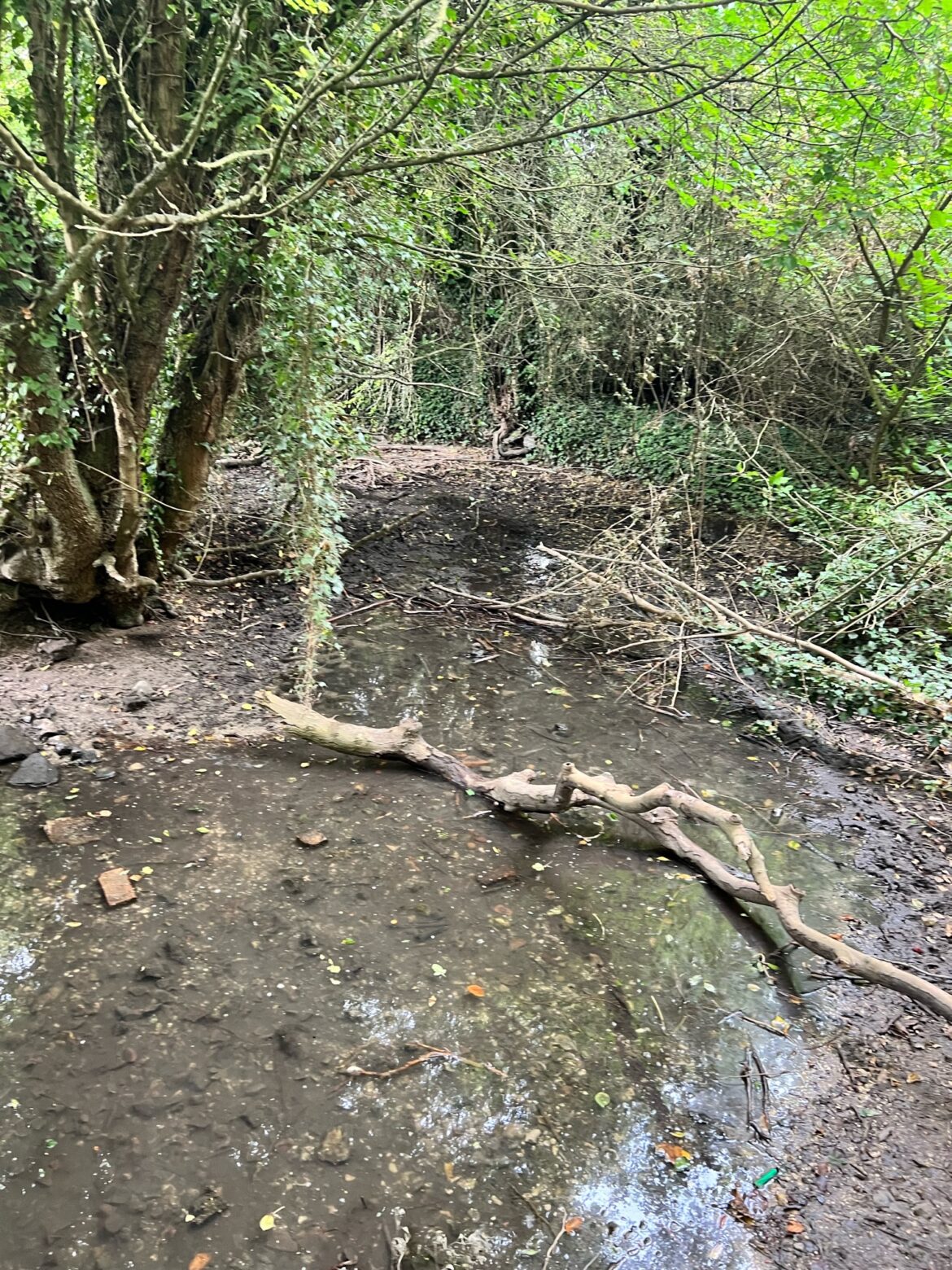
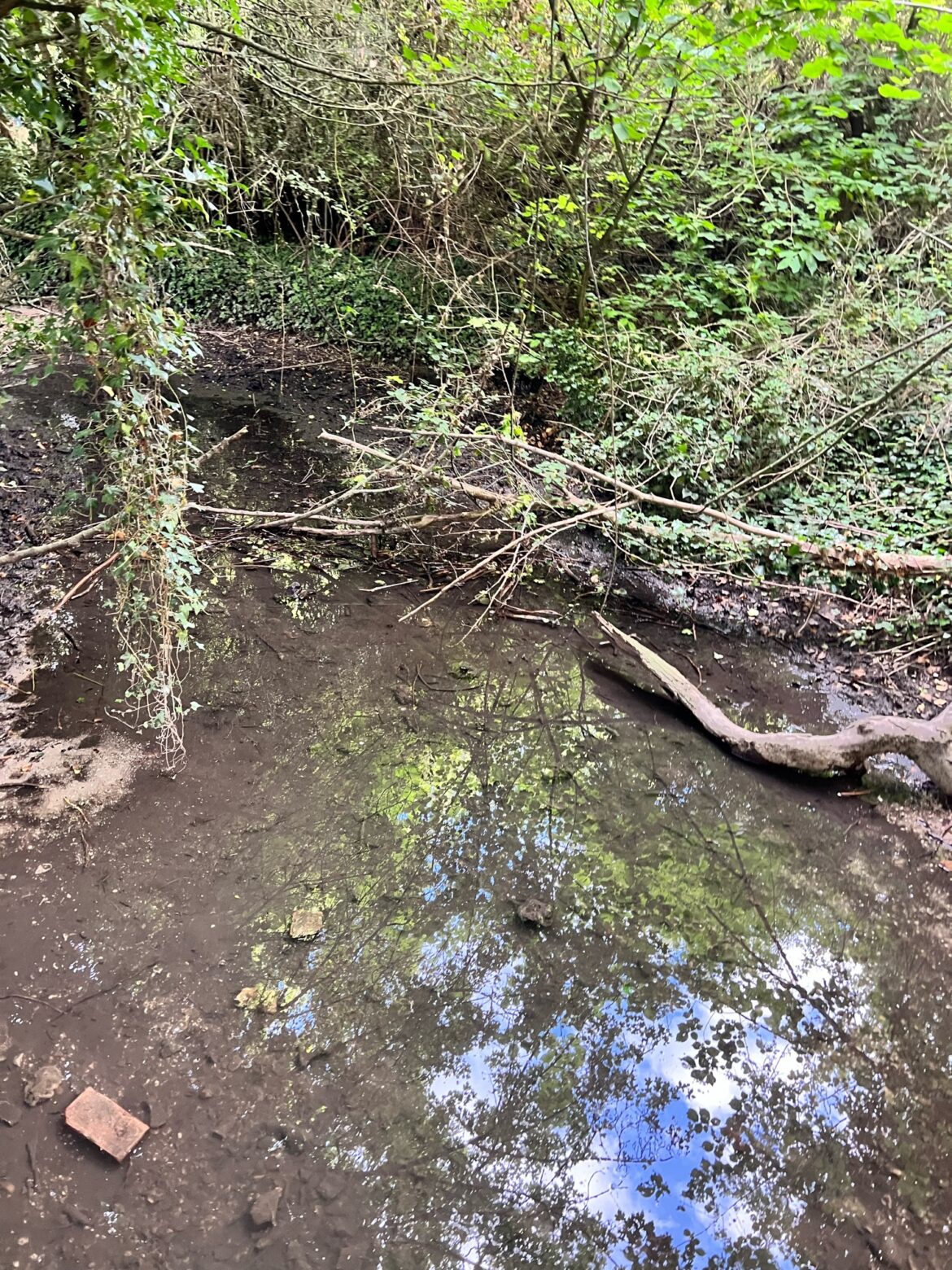
As you will be aware, the rainfall last autumn and winter was very low. This rainfall is critical to the recharge of groundwater-fed chalk streams. This left the upper River Ivel in a precarious position coming into 2022. Spring and summer rainfall has also been very low, and we are officially in a “prolonged dry period” according to The Environment Agency. The head spring of the river only flowed for about 8 weeks, in March and April. Indeed, ‘’flow’’ is a very generous description – ‘’seeped’’ is more accurate.
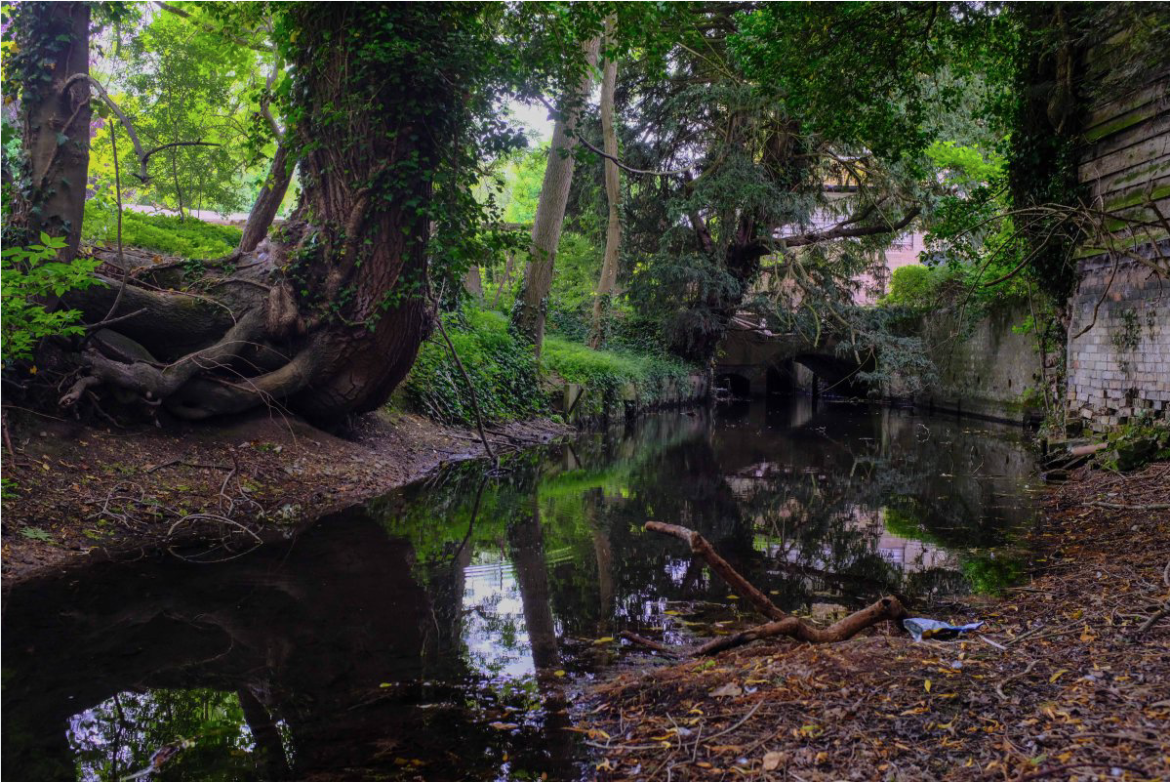
It should, and historically did, flow strongly all year round. Revivel commissioned a report from John Lawson whose analysis confirms that under natural flow regime, flow would have been perennial. The flow ceased at the head spring at the end of April and the river has been progressively drying up since then. Flow through the culvert at Ivel Springs Nature Reserve stopped at the end of June, and mid-August there was no flow at the Iron Bridge in Radwell Meadows. The southernmost springs in Radwell Meadows have also stopped flowing and we can expect this trend to continue given the forecast of hot and dry weather.
Unbelievably, Affinity Water are showing no signs of implementing a hosepipe ban and clearly put the freedom of people to use hoses, sprinklers, and pressure washers above the health of a globally rare chalk stream. If you are as outraged by this as we are, we suggest you let them, and your local MP know your feelings on a regular basis until the situation improves.
Affinity Water- Affinity Water, Tamblin Way, Hatfield, AL10 9EZ
Oliver Heald – Oliver.heald.mp@parliament.uk
Earlier this year, thanks to the huge generosity of Revivel’s members and many others who very kindly donated , we were able to commission the services of John Lawson (a renowned specialist in this field) to conduct a study on the upper Ivel and make recommendations as to how to save our river.
His draft report was discussed in detail at a recent meeting with the Environment Agency (EA) and
Affinity Water. John Lawson and Charles Rangeley-Wilson OBE (author, conservationist, and Chair of
a national chalk streams restoration group) supported RevIvel at the meeting.
If would like to read the redacted report in full please click the link below.
For the highlight of the report the summary is as follows.
Key findings of the draft report:
- With “abstraction as a percentage of recharge” (note 1) at 53%, the upper Ivel is amongst the most over-abstracted chalk streams in the country and, as a result, the river is increasingly dry for long periods
- Historic evidence supports that the water table used to be 3-6m higher. At Black Horse Mill the water used to flow all year round, providing sufficient power to grind corn (note 2). John Lawson concludes that reduction in flows is consistent with increasing abstraction
- Impact of abstraction:
- John Lawson employs the “Chalk Streams First” mathematical model to explain the daily water balance model (note 3). EA representatives have agreed many of the principles behind the model
- Whereas Affinity Water bases its views about the impacts of abstraction, in the area around the boreholes, on 3 “switch off” tests conducted in 2015/16; whereby 1 borehole at a time was switched off for between 10-30 days. Affinity Water’s conclusion was that stopping abstraction resulted in no discernible increase in flow (you might agree with John Lawson when he countered that these switch-off tests might have been too short/ limited in scope to give measurable flow increases?)
Recommendations of the draft report:
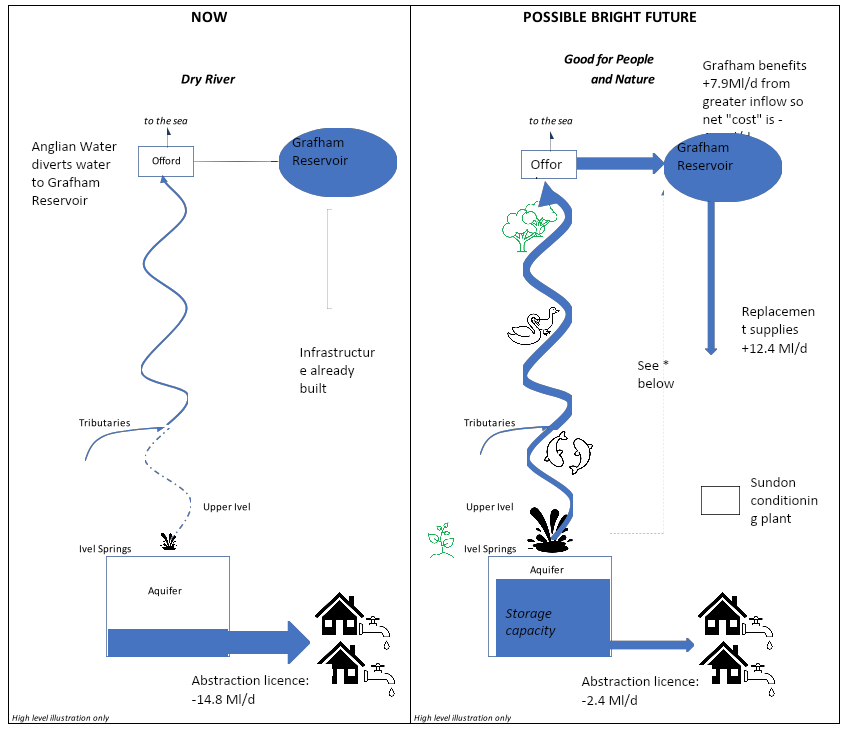
- The existing licence of 14.8 Ml/d would need to be reduced to 2.4 Ml/d to achieve the CaBA (note 4) recommendation that abstraction should comprise no more than 10% of the recharge rate, to ensure a healthy chalk stream
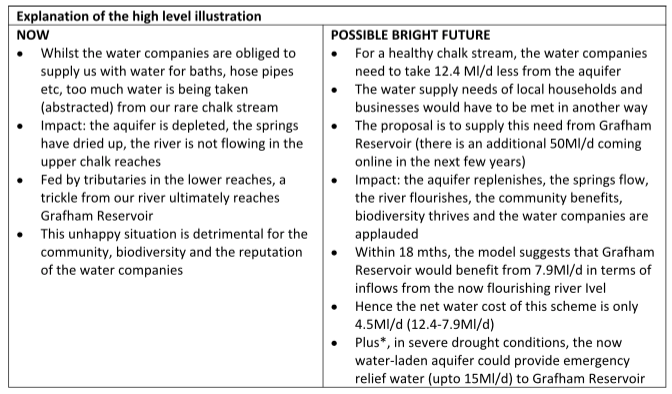
- John Lawson suggests an innovative, neat solution to save the upper Ivel.
Please see high level illustration of the proposed solution to save our river:
Benefits of John Lawson’s proposed solution:
1. It does not cost much in terms of new infrastructure i.e. low carbon
2. It does not cost much in terms of water requirements (net 4.5Ml/d)
3. It utilises the emergency storage capacity of the aquifer and could help alleviate drought
conditions locally
4. The upper Ivel could be a test case to save chalk streams nationally
Next steps:
1. John Lawson’s paper is being peer reviewed (note 5)
2. RevIvel will submit/ present the proposed solution to Water Resources East/ Water
Resources South East (WRE/ WRSE) to be included in regional and national plans which
determine water allocation for the rest of the century. It is critical for our voice to be heard
3. Further meetings are planned over the summer with Anglian Water, Affinity Water and the
EA to:
Achieve consensus on the impacts of abstraction
Challenge the EA classification (per The Water Framework Directive) of the flows
and ecological status of the upper Ivel; this is currently “good”, making it hard to
argue that urgent action is needed
Keep pressure on the relevant bodies to adequately take account of the needs of the
upper Ivel
Finally:
If you have any questions or can offer expert help in any of these areas, please contact
media@revivel.org. We would love to hear from you.
This update covers the “John Lawson” work only. A further update will follow about the state of the
river and other actions which RevIvel is undertaking.
Notes:
1. Average abstraction 12.4Ml/d/ average recharge is 23.6Ml/d. Recharge refers to the rate of
replenishment of the aquifer which is largely dependent on autumn and winter rainfall
2. There used to be perennial flows of 5-10Ml/d (millions of litres per day)
3. The CSF model computes the daily aquifer storage within the Upper Ivel catchment by simulating the
water balance of inflows from effective rain and outflows from river flow, underflow and abstraction
4. Note 4: The Catchment Based Approach (CaBA) is an inclusive, civil society-led initiative that works in
partnership with Government, Local Authorities, Water Companies, businesses and more, to maximise
the natural value of our environment
5. Note 5: Peer review: the process by which something proposed (as for research or publication) is
evaluated by a group of experts in the appropriate field. Peer review enhances the credibility of the
manuscript